
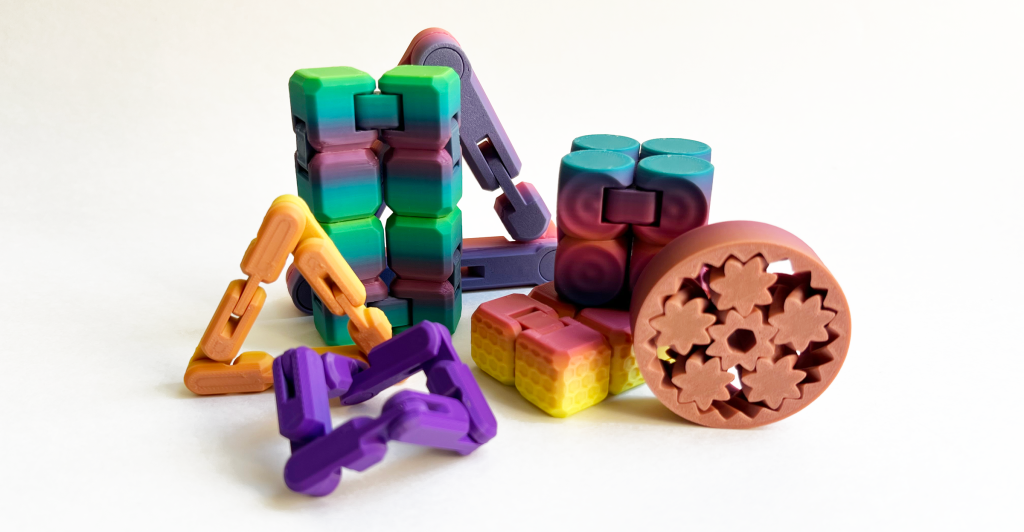
There are so many different styles of fidgets available out there that it can get pretty overwhelming trying to choose. Not to mention that everyone fidgets a little differently. I’m a big fan of magnets while the kiddo gravitates toward beaded items (her current favorite is a thick string of Mardi Gras beads!)
So what should you think about when choosing a fidget?
5. Goal
When you read through the science, you’ll see that fidgets can target a lot of different goals. Some of the different reasons people use fidgets include:
- Calming/soothing
- Meeting a sensory need
- Improving focus
- Redirecting movement
- Stimulating thought
You can have different fidgets for different goals or find a fidget that “scratches more than one itch.” But you won’t be successful with either if you don’t know why you want it.
4. Sensory Preferences
The kiddo once received a gift of sticky slug fidgets that were a huge “no go.” While they looked awfully neat, the sticky feeling on her fingers was a big turnoff. That’s why – before choosing a fidget – it’s a good idea to think through the your senses and identify any needs or triggers.
- Sight: Flashing lights, bright colors, or other visual stimuli can be a big attraction for some folks and overstimulating to others.
- Smell: Slime, squishies or other products can include scented components – and not all of them are good!
- Sound: Think of both intentional noise (like programmed sounds) and unintentional sounds (like magnets clicking together)
- Touch: Fidgets can be soft, smooth, sticky or any other texture you can imagine. And like with the sticky slugs, the texture can make or break the experience.
- Taste: Some fidgets are intended for biting (like chewelry). A strong flavor can be very off-putting.
- Resistance: I happen to like magnet fidgets because of the delightful feedback I get from the resistance. Putty, rubber, and sand-filled fidgets also offer great sensory feedback.
3. Environment
The place you intend to use your fidget can have a huge impact on your choice. For example, you wouldn’t want to use a really disruptive fidget in a place that requires quiet and concentration (school, work, place of worship). You should also think about whether a fidget will hold up well in the place where you plan to use it – you probably wouldn’t want to choose putty or slime if you work in a hair salon!
2. Durability
After you’ve taken all this thought to choose the perfect fidget, you really don’t want it falling apart on you. That’s why durability should also be an important part of the recipe.
With some fidgets, the goal is destruction, so you should also look at the cost to maintain that. Is it going to end up in the landfill or can it be re-used?
1. Distraction Free
The most effective fidgets are the ones you don’t have to think about using. It can help to monitor your natural fidgeting behavior for a while and think about how it serves you. After all, the fidgets you start unconsciously are the ones that are most likely to be distraction free.
For example, if you find yourself constantly fiddling with the hood strings on a sweatshirt, something loopy may work better for you. Stacking and unstacking? Infinity cubes are great for that.
 The Fidget Project